

// Climate tech / Sustainability
Automating carbon-footprint scoring for a climate-impact food platform
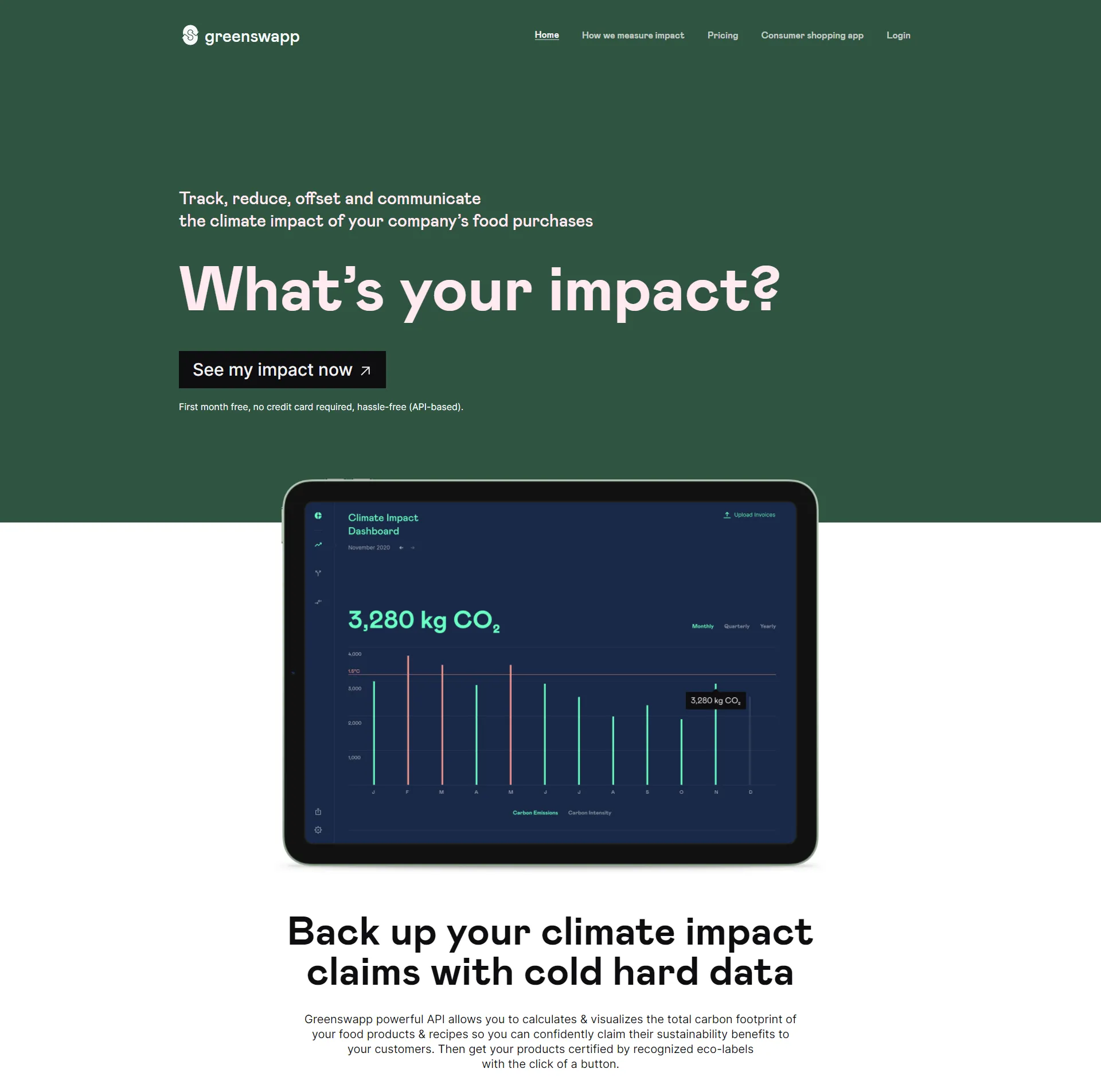
Product-level carbon scores, at catalogue scale
// Outcome
From hand-labelled spot checks to automated impact scores across full grocery catalogues
// Challenge
The problem, in plain language.
GreenSwapp needed to put a credible carbon-footprint score on every food product in a grocery catalogue — not just the few hundred items sustainability analysts could hand-label. Doing that manually didn't scale to supermarket-sized inventories, and shoppers needed the answer at shelf-edge speed.
Approach
We started from the gap between how sustainability analysts actually score a product — ingredients, sourcing, packaging, process — and how quickly a shopper expects to see a colour-coded answer in the aisle. Hand-scoring doesn’t survive contact with a supermarket catalogue, so we framed the problem as a retrieval task: match each product’s metadata against a reference base of lifecycle-impact data, then fall back to model-based inference when the match is weak. That let us keep the sustainability team in the loop on edge cases without making them the bottleneck on everything else.
Solution
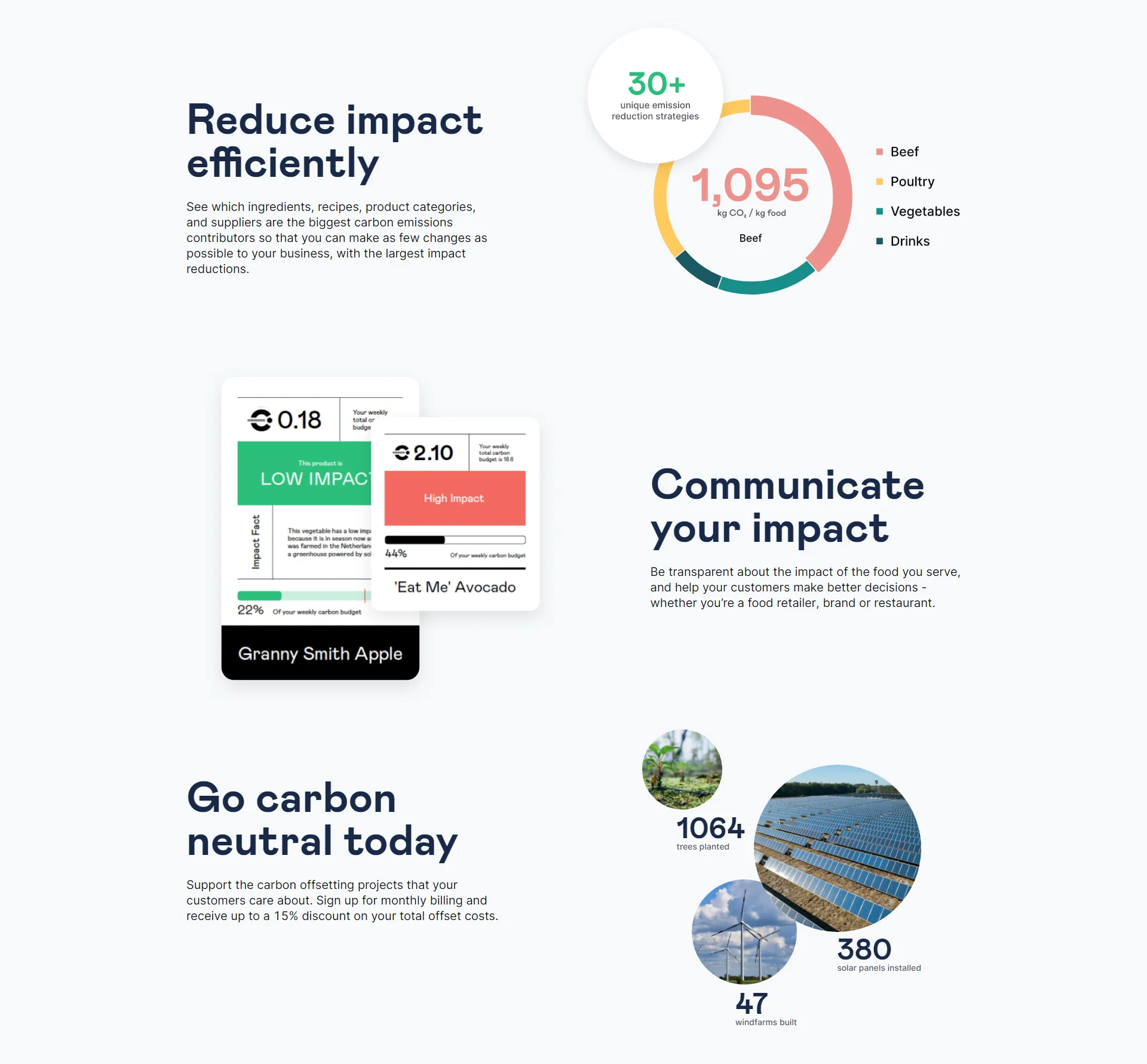
We shipped an ingestion pipeline that takes raw product feeds (titles, ingredient lists, category tags, weights, packaging hints) and resolves them to structured impact factors, with confidence scores that flag low-certainty items for human review. A retrieval layer grounds each score in a reference corpus of ingredient- and category-level lifecycle data, so the output is explainable rather than a black-box guess. We wrapped it in an API the GreenSwapp team could offer to supermarkets and online grocers, and a simple web surface for the consumer side — barcode lookup, low/medium/high impact bands, and swap suggestions built on the same scoring backbone.
What changed
Carbon scoring stopped being a bottleneck on GreenSwapp’s roadmap. Instead of analysts grinding through products one by one, the pipeline now handles whole-catalogue ingestion and hands back explainable, retailer-ready scores — which is what made the platform plug-in-able for grocery partners in the first place. The team could focus on what their reference data should cover next, rather than on keeping up with the next catalogue drop.
// Gallery
Inside the build.

// Client voice
“We came in with a climate mission and a data problem. Ankor treated the data problem like the product — not a side project — and shipped something our retail partners could actually plug into.”
Founder, climate-tech startup
// Related services
How we could do this for you.
AI Product Engineering
AI features that ship like real products.
Design, backend, frontend, and ML — one coordinated team from prototype to production.
See serviceRAG Implementation
RAG pipelines your legal team signs off on.
Grounded, cited, permission-aware retrieval — with evaluation harnesses that catch regressions before users do.
See service// Ready to ship?
Ready to ship something like this?
Short call. No deck. We will tell you honestly whether we are the right team for your problem.